
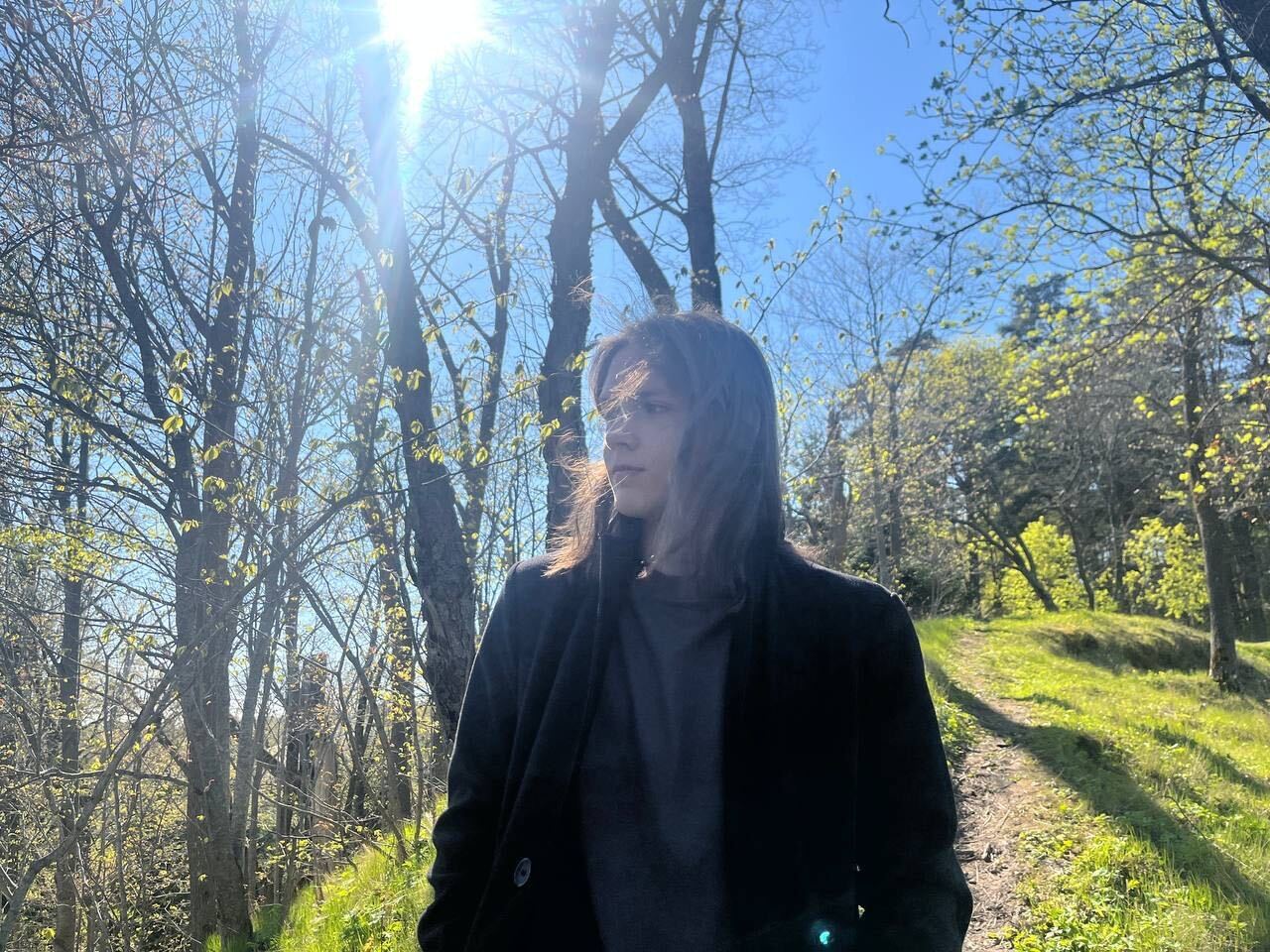
Learning a new language is about more than memorising words and grammar rules. It is equally important to gain the confidence and support to use the language in everyday life and communicate with others. This is exactly what Ilja experienced through the Language Ladder project, where language practice sessions and study visits helped him learn more about life and people in Estonia, improve his language skills and discover new opportunities for his future. One of these opportunities eventually led Ilja to study 3D Art and Design at Tartu Art School.
Language practice gives you wings
Through the European Union-funded project implemented by the Estonian Refugee Council, Ilja, who came to Estonia after fleeing Ukraine, realised that speaking Estonian was not as frightening as he had thought – the most important thing was simply to start.
“If you say even one random word, it becomes much easier to keep the conversation going. The main thing is to get your message across, rather than trying to phrase it perfectly. Even two simple words can be more useful than spending a long time thinking about complicated structures and rare expressions,” Ilja says, reflecting on his experience.
“I managed to almost completely overcome the nervousness I initially felt when speaking to native Estonian speakers. I began to understand them better and felt more confident about approaching and talking to them myself. The meetings organised by the Estonian Refugee Council also helped me develop my social skills. I am quite a reserved person, so it has become easier for me to talk to strangers and make new acquaintances. The language practice sessions helped me overcome some of the fears that many newcomers have when faced with an unfamiliar language, a different mentality and a different way of life.”
Study visits offer inspiring experiences
Ilja also enjoyed the trips and study visits organised by the Estonian Refugee Council, which introduced young people who had arrived in Estonia to Estonian culture and traditions, while also giving them an insight into possible opportunities for their future here.
“The trips always took us to interesting places and were very well organised. Places that are familiar to local people but unknown to newcomers like me turned out to be fascinating and exciting.”
For example, the group visited the Jõhvi Church Museum, which, according to Ilja, offered a much deeper and darker glimpse into history than he had expected. They also visited the Jõhvi Fire and Rescue Station.
“I really liked the museum exhibits, and the guide was very friendly and talkative. At the Jõhvi Fire and Rescue Station, I was a little envious listening to the firefighters talk about their living conditions. I also got to see different aspects of their challenging work and even try on their impressive equipment. I also got to slide down the firefighters’ pole.”
In Tartu, the group visited the Upside Down House, which Ilja found very interesting, exploring its different corners and details. But the visit to Tartu Vocational College (VOCO) proved to be a turning point of sorts.
“The visit to VOCO was very interesting and changed my understanding of the Estonian language. It was the first time I realised that I could actually understand what the teachers were saying when they introduced us to the school. I didn’t find a suitable specialisation for myself there, but I was pleasantly surprised both by the study opportunities and by how much Estonian I could actually understand.”
The highlight of the trip to Tartu, however, was a study visit to Tartu Art School organised by the Estonian Refugee Council.
“That day, in a way, determined my future. Two young students showed us around the school. They had also experienced the challenges faced by students who have moved to Estonia, so they were able to help me find answers to my questions and even gave me contacts I could turn to with further questions.”
According to Ilja, Tartu Art School is a truly special place: very open, modern and welcoming to everyone.
“I encountered a lot of creativity there, and I really liked the cosy atmosphere of the school itself. That’s how I found my place at Tartu Art School. The entrance exams were not easy, but I kept communicating, asking questions and seeking clarification from the coordinators. In the end, I was accepted to study 3D Art and Design!”
The activities described in this article are funded by the project “Language Ladder: Learning And Nurturing Growth Using Adaptive Guidance & Education for Refugee Youth in Estonia and Poland”.
The project is being implemented in collaboration with Tallinn University and the Polish organisation Dobra Fabryka. Funded by the European Union. Views and opinions expressed are however those of the author(s) only and do not necessarily reflect those of the European Union or European Social Fund Agency. Neither the European Union nor the Granting Authority can be held responsible for them.
