
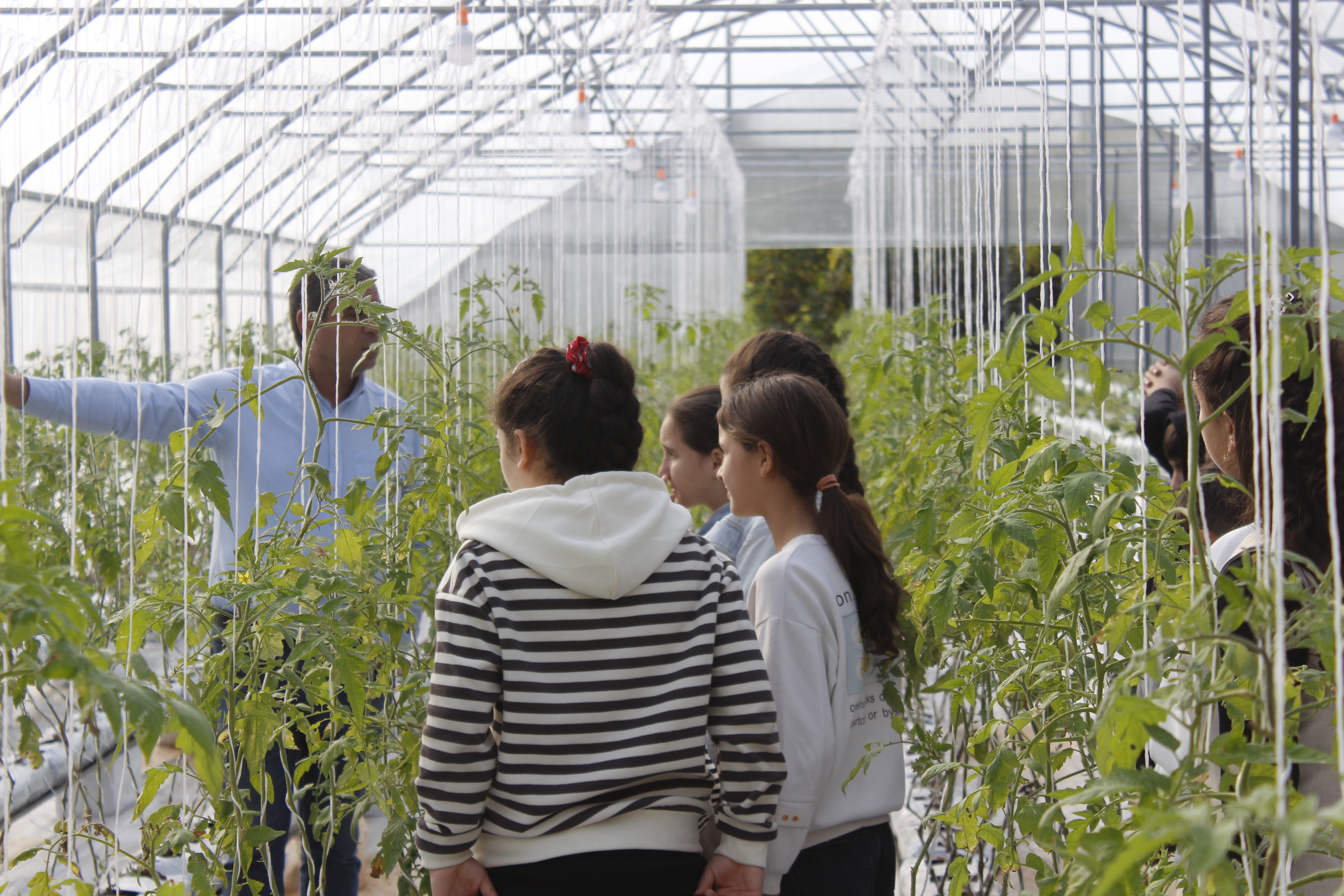
Thanks to the environmental education programme by the Estonian Refugee Council, students at three schools in the Tavush region of Armenia can now learn sustainable agricultural methods and contribute to environmental protection through their daily practices. Hydroponic greenhouses and composting facilities have been established at the schools, and the environmental education of the students is actively supported.
In the rural areas of Tavush, access to water is often limited. In this context, water- and energy-efficient solutions, combined with practical environmental education, help communities thrive and foster sustainable habits.
The programme helps Tavush schools embed a sustainable mindset into daily practices, equipping students to cope with climate challenges and ensure food security even in water-scarce conditions. This is achieved through hydroponic greenhouses that use up to 90% less water for growing crops, alongside integrated composting solutions and practical environmental education within the school curriculum, helping students develop the skills needed to succeed in the future.
Sustainable Food Systems
As part of the project, hydroponic greenhouses have been installed in Achajur, Sevkar, and Koghb schools, allowing a variety of crops to be cultivated. Each greenhouse is equipped with solar panels, rainwater collection and filtration systems, and composting units, promoting the use of water- and energy-efficient technologies.
The project also achieves a social objective by providing three local residents with training and employment opportunities. They gain practical experience, learn hydroponic cultivation techniques, and contribute to the daily operation of the greenhouses.
To promote sustainable organic waste management, we introduced composting practices at the beginning of the school year in all three schools. This provides a practical solution for handling organic waste while serving as an educational tool, teaching environmentally friendly methods.
The programme team worked closely with experts from the Estonian University of Life Sciences to develop comprehensive composting guides. Printed and distributed to all participating schools, these guides provide step-by-step instructions and practical tips, helping students and staff maintain high-quality compost consistently.
Practical and Forward-Thinking Environmental Education
One of the programme’s key goals is to raise awareness among schoolchildren in rural Tavush about efficient water use through hydroponic systems and the importance of organic waste composting. By integrating practical skills with environmental education, the programme promotes sustainable habits and knowledge that students can apply in their communities.
Training sessions in all three schools combined theory with hands-on activities. Over 400 students learned about sustainable practices and their importance for environmental conservation and responsible resource use.
Stella Pirumyan, Principal of Achajur Secondary School, shared her impressions: “Students are highly motivated to participate in greenhouse activities. They have even named the plants, and each student monitors the progress of their own plant.”
In addition, the Estonian Refugee Council team developed project-based learning modules, officially approved by the Ministry of Education, Science, Culture and Sports of the Republic of Armenia allowing schools to integrate greenhouse and composting activities into the national curriculum. In collaboration with the state, extracurricular “greenhouse clubs” were also established, where students actively participate in cultivation and apply their knowledge in practice.
Benefits for the Local Community
The programme does not only introduce environmentally friendly technologies and sustainable agricultural practices; it also provides local residents with training and employment opportunities, promoting environmental awareness, innovation, and community development. It creates an environment where young people and adults can learn through practical experience, share knowledge, and develop responsible habits that support both personal growth and community well-being.
Through practical experience, expert guidance, and ongoing student engagement, the programme helps cultivate an environmentally conscious young generation, strengthens their connection to the community, and supports a more sustainable and resilient future for the region.
The project is funded by the Ministry of Climate through international climate cooperation funds.