Image

Young Ukrainians who have fled the war to Estonia want to speak Estonian, but their language learning is often hindered by a lack of practice and fear of making mistakes. To support young people’s language learning, the Estonian Refugee Council has organised more than 60 meetings based on the invisible language learning methodology for young people with a refugee background over the course of the autumn.
The regular, practical meetings are based on an approach developed by experts from Tallinn University, which places learning Estonian through shared activities and hands-on tasks at its core. Practice has shown that language learning is best supported by activities proposed and approved by the young people themselves – this keeps motivation high and shifts participants from the role of a “target group” to that of active partners in cooperation.
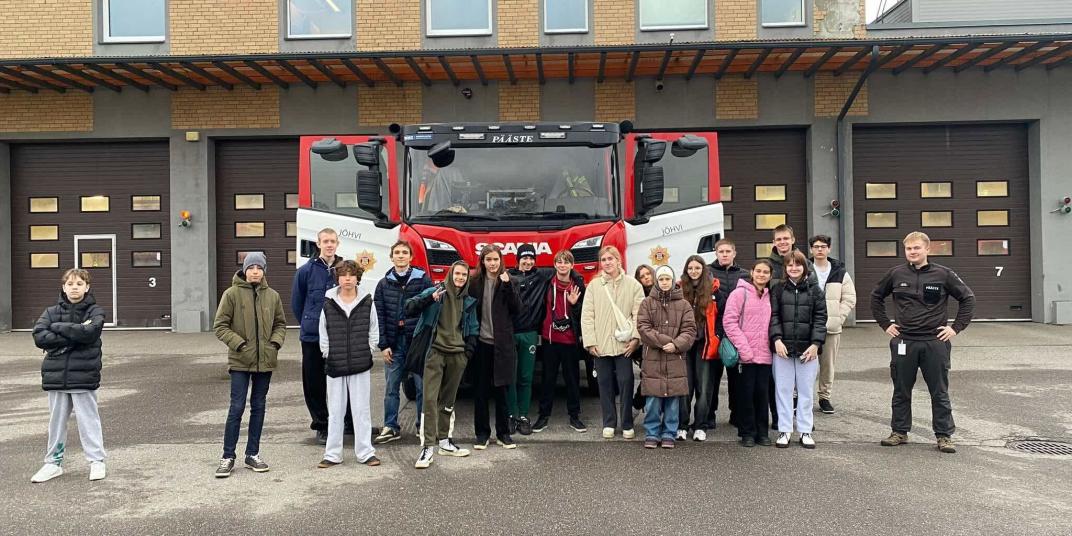
In Tallinn, for example, a fun board games evening took place in October, where young people played various games and practised Estonian by interacting with one another at the same time. In addition, the groups visited the PROTO Invention Factory, went bowling, cooked together and decorated gingerbread biscuits. Young people in Jõhvi and Kohtla-Järve visited local sites as part of the programme, including the Kohtla-Järve Oil Shale Museum, the Jõhvi Library and the Firestation. They also played board games together and watched several Estonian-language films, which provided opportunities both to develop language skills and to engage in shared discussion and the exchange of experiences.
The Jõhvi youth group visited the Jõhvi Church Museum, and one of the young people was so pleased with the visit that they highlighted it separately:
“The museum visit was fantastic! I really liked it – there was a wonderful atmosphere, and the guide was friendly and energetic. I had never even thought that such an important relic could be located so close by. I absolutely loved moving through the narrow, damp corridors where people from different eras have walked over the centuries. A truly astonishing discovery! The entire ambience of the church was very powerful – you can sense the centuries-old dignity and a certain religious reverence that is characteristic of church architecture. Overall, I am delighted. The visit also coincided with my literary study of biblical texts, which made the whole experience even richer.”
During all of these visits and activities, the focus was on practising everyday language skills and the common words and expressions associated with specific places or activities. Indeed, the emphasis of the meetings is on the activities themselves, spending time together with peers and discovering new places. Language learning is invisible and arises naturally from the environment and the activity. The youth group leader speaks only Estonian and has selected a limited set of expressions and words to emphasise repeatedly within other conversation and to encourage their use. This ensures that the meetings do not resemble a traditional language lesson, but instead create an easy, natural opportunity to develop Estonian language skills. For example, after decorating gingerbread biscuits, the young people’s vocabulary includes words such as “gingerbread”, “Christmas”, “thin”, “thick”, “I am decorating” and the names of different colours.
The language groups include young people aged 13–18 with a refugee background. Local young people also take part in the programme as group leaders and language learning mentors. Since October, four groups have met weekly in Tallinn and two groups in Jõhvi.
For young people with a refugee background, entering the labour market is often more difficult than for their peers, as they must simultaneously adapt to a new language, education system and cultural environment. Previous studies and work experience may not be recognised or supported in the host country, and the lack of necessary contacts and networks makes finding a first job even more challenging.
The aim of the programme is to address these challenges and make young people’s entry into the Estonian labour market smoother, thereby supporting more effective long-term integration into society. Through the programme, we offer young people opportunities to meet companies operating in different sectors, introduce study opportunities both in Estonia and elsewhere in Europe, and show how to compile a CV, apply via job portals and address other important topics that help to improve young people’s competitiveness in the labour market.
As part of the programme, young people can also take part in mental health support group meetings based on the MindSpring methodology, in order to strengthen coping skills, share experiences in a safe environment and receive support in dealing with stress, adaptation and future-related challenges.
Read more about the programme:
https://www.pagulasabi.ee/en/eesti-pagulasabi-supports-language-learning-refugee-background-youth
The project is being implemented in collaboration with Tallinn University and the Polish organisation Dobra Fabryka. Funded by the European Union. Views and opinions expressed are however those of the author(s) only and do not necessarily reflect those of the European Union or European Social Fund Agency. Neither the European Union nor the Granting Authority can be held responsible for them.


